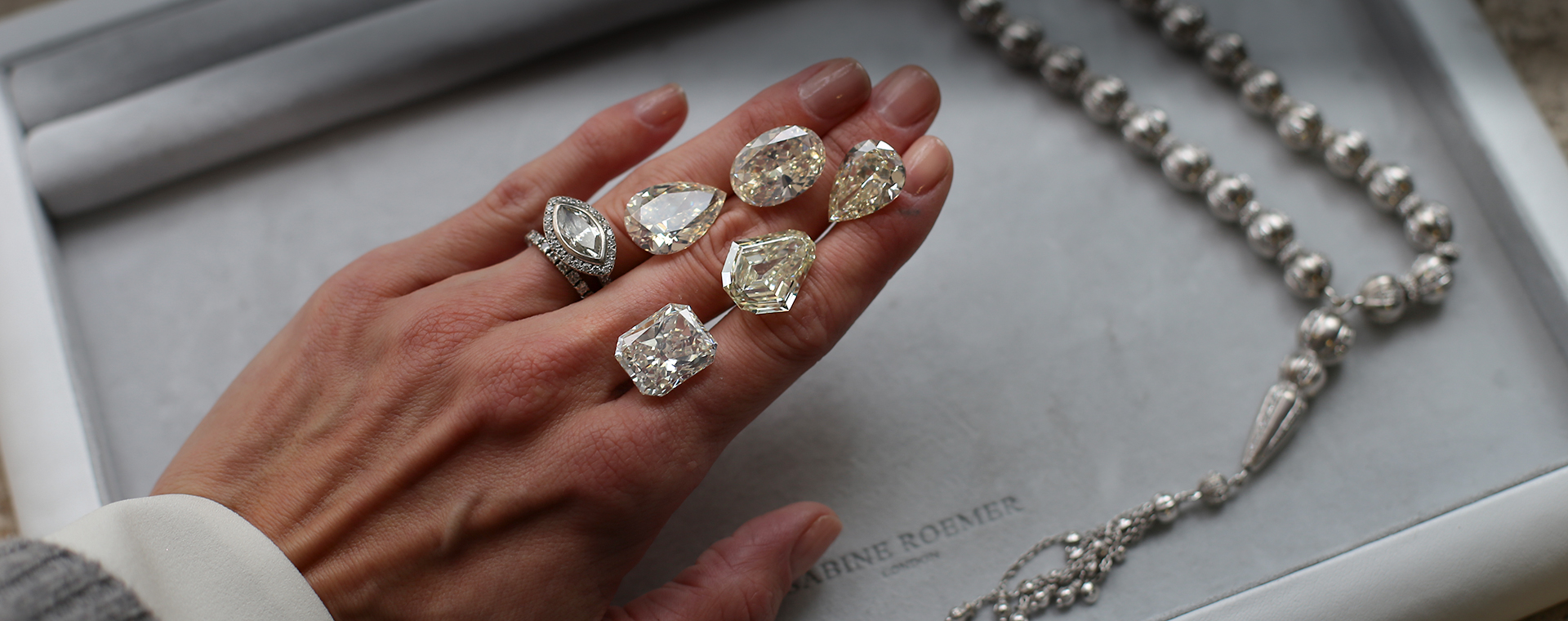
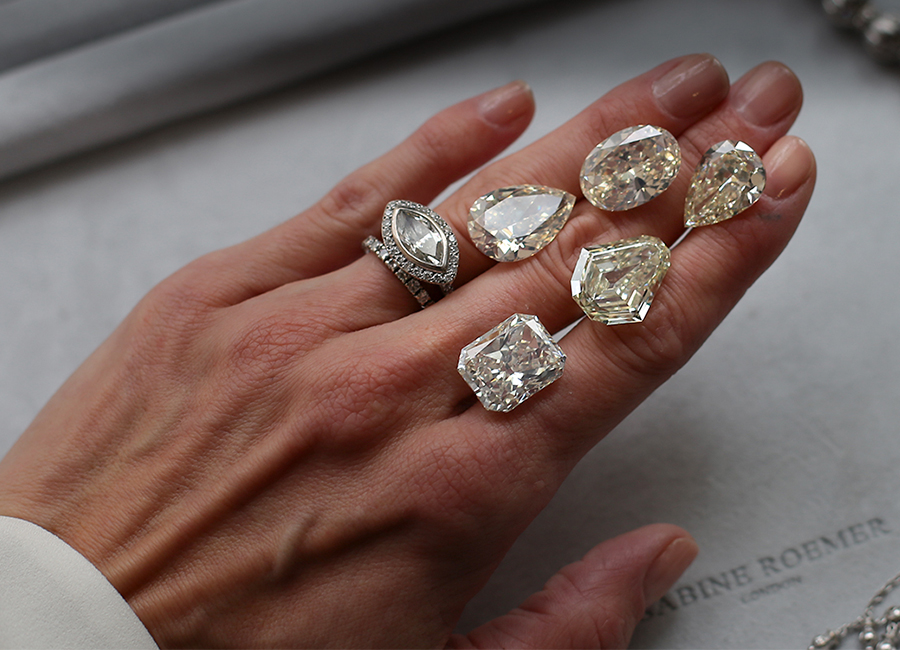
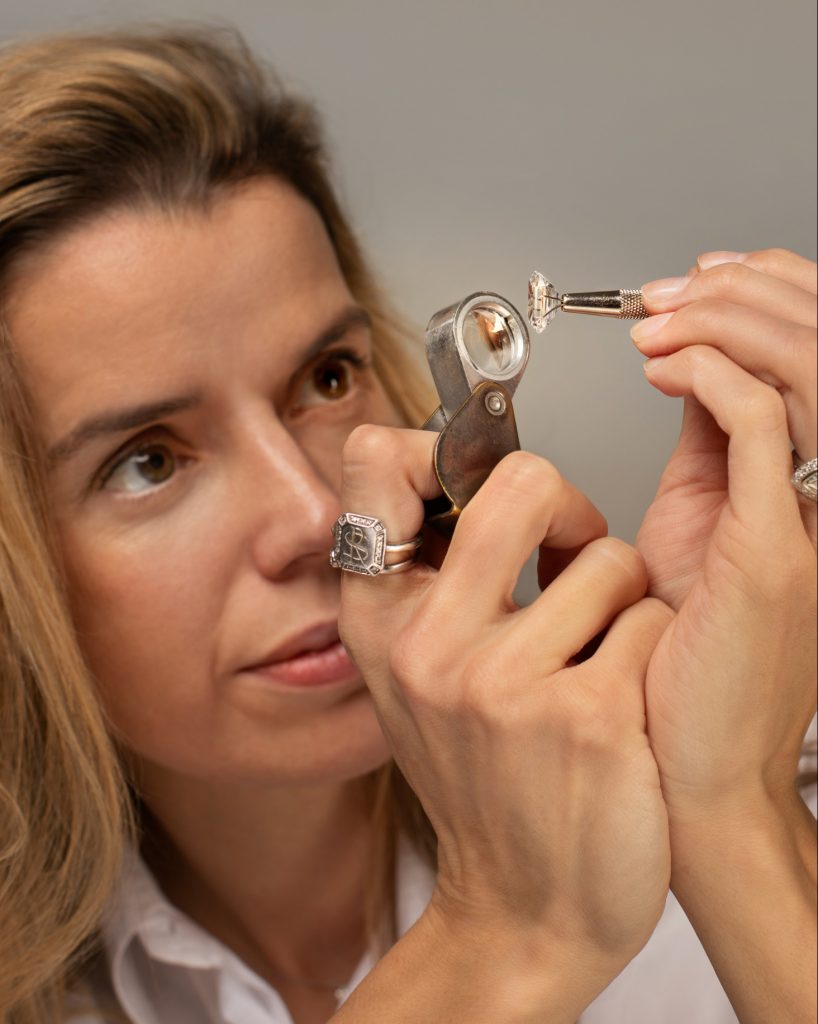
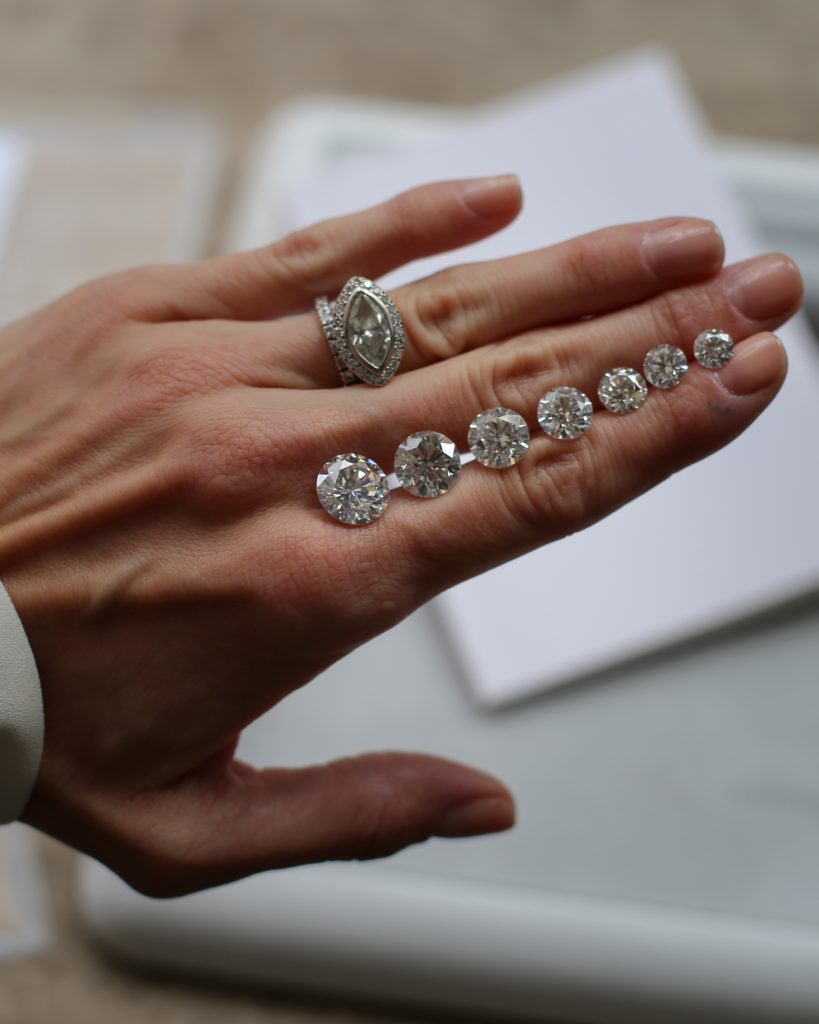
Sabine handpicks every single Diamond to assure the Fire, Life and Brilliance is the best for what you can get and to pick an amazing stone with their own “character”. Each Diamond has their own fingerprint with their own characteristics – the 4Cs relate to Cut, Colour, Clarity and Carat weight.
The important part is to know what to look for and to have a trained eye to see the difference.
“ Two diamonds which look the same on paper/and on the certificate can be quiet different. One is dull or even lifeless and the other sparkles and has “ fire”.
Diamonds were created by nature 3.5 billion years ago and therefore have their own unique characteristics. All diamonds which we see on earth have been developed in the extreme depth, and came out through a volcanic eruption or other natural process.
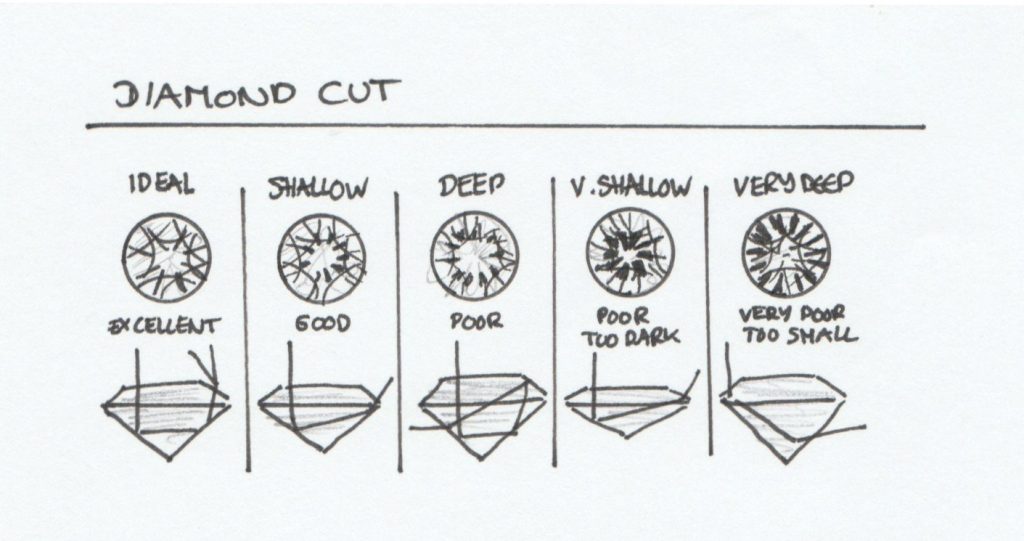
CUT
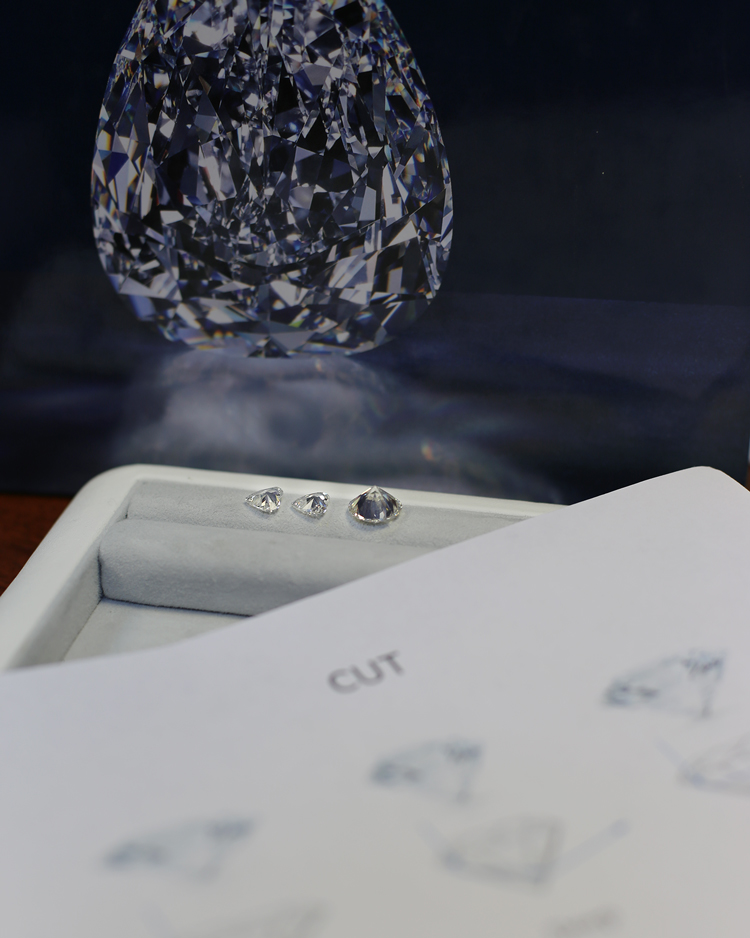
In our opinion this is the most important of the 4C’s —it refers to how a diamond’s facets interact with light. It is determined by symmetry, proportion and polish and therefore gives the stone “fire and life” or nothing.
clarity
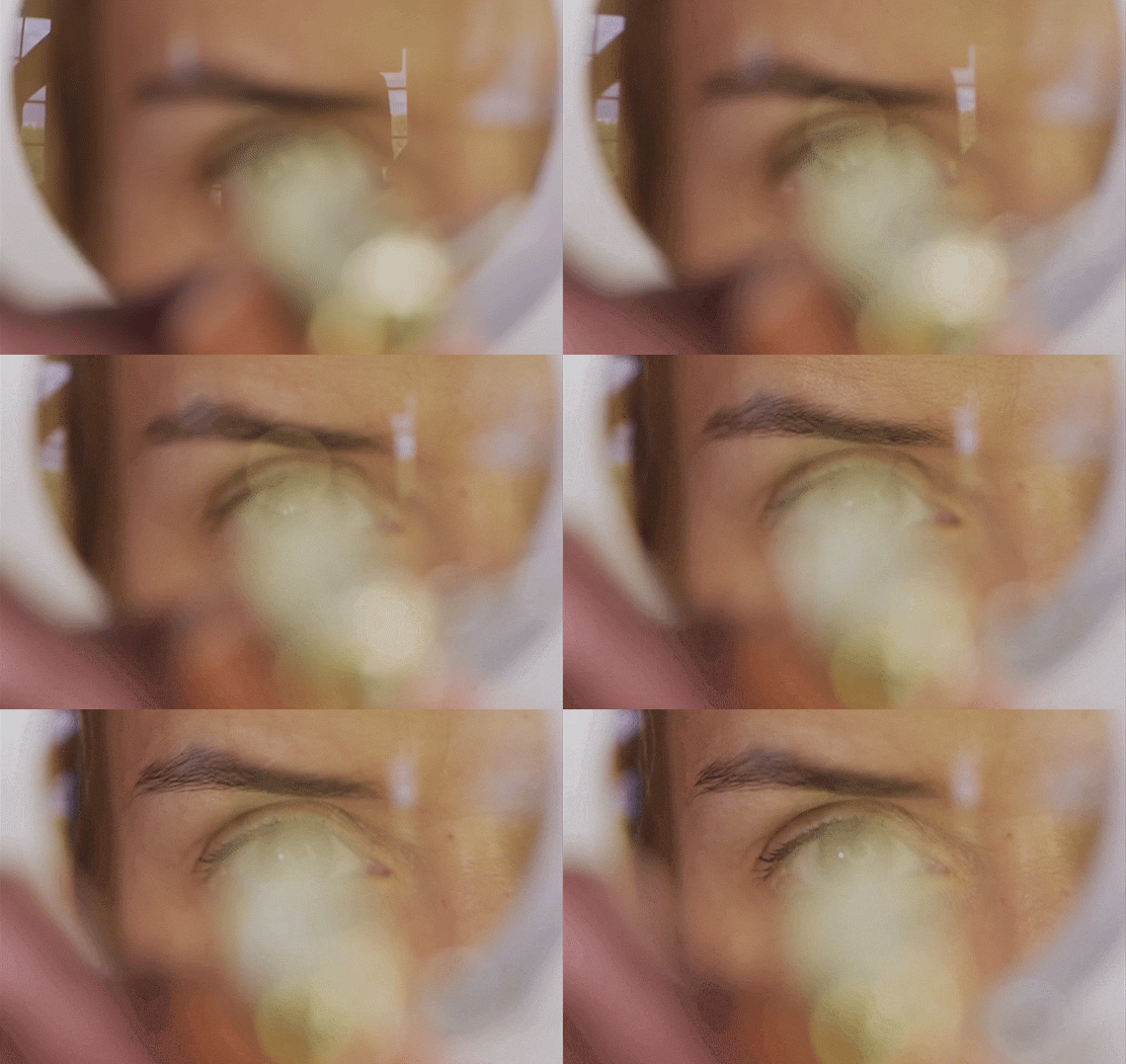
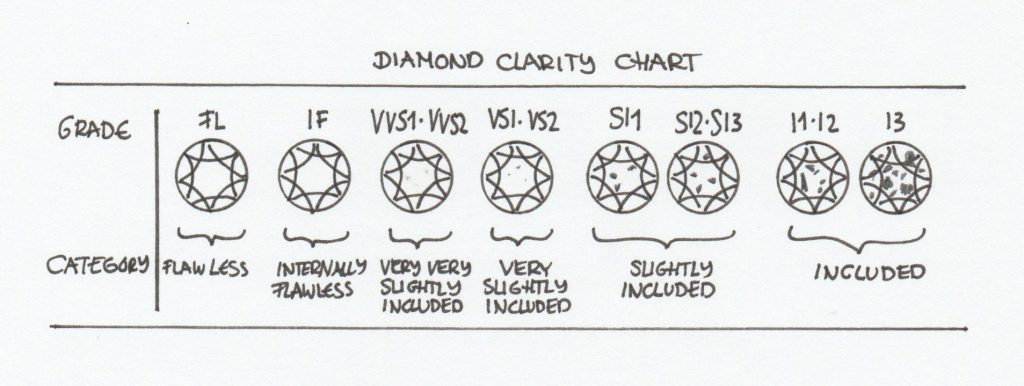
A Diamond’s clarity is measured by the purity and rarity of the stone. Every Diamond get’s graded under a 10- power magnification for visible characteristics. Inclusions can vary from black inclusions to white feathers.
colour
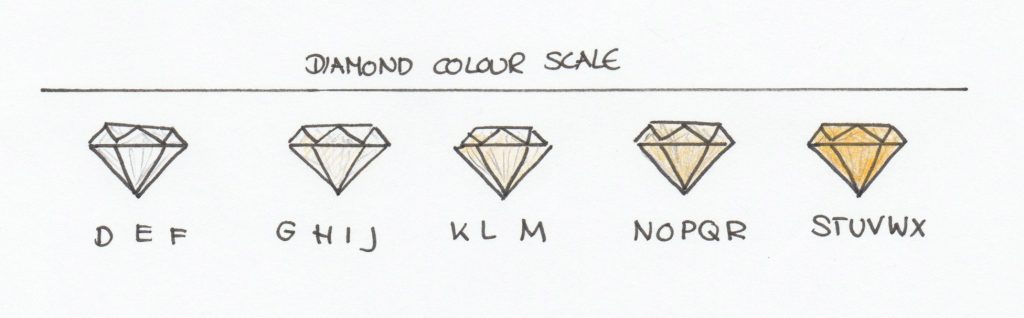
Colour is the second most important indication of the stone’s appearance as it affects how white and clear a diamond looks. With a poor colour grade the stone can appear slightly yellow instead of the desired brilliant white.
Another important thing to look out for is the fluorescence. It might not be as valuable on the open market as it sometimes reduces the price and can dull a stone. But sometimes it also can enhance colour and make the stone look brighter than it is.
Every natural diamond has a a slight tint of yellow. The closer to being “colourless” a diamond is, the rarer it is.
carat
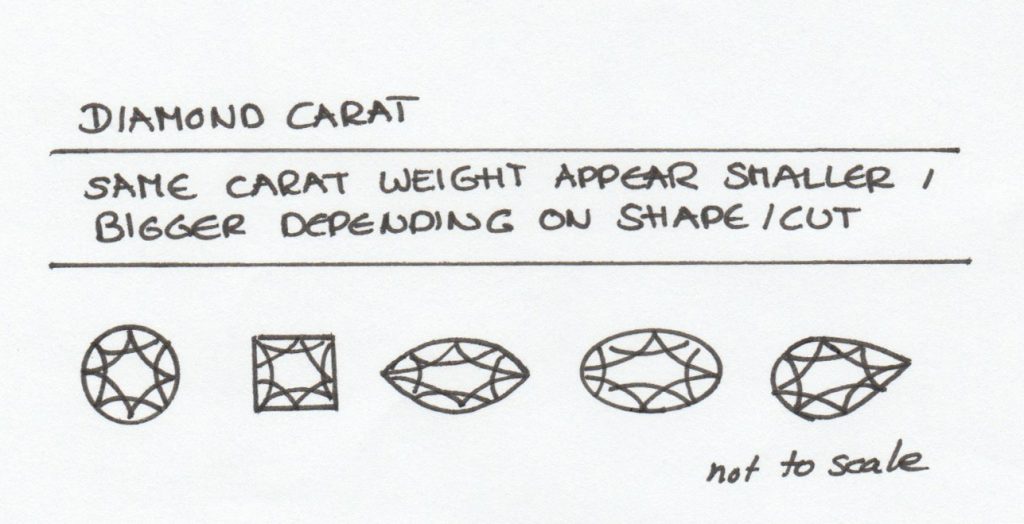
Carat denotes the weight of a diamond, not the size. 0.200 grams Carat is the unit of measurement for the physical weight of diamonds. One carat equals 0.200 grams or 1/5 gram.
Two diamonds with the same carat weight might appear different and one might look bigger than the other. This will be an indication of Cut and not carat weight. In other words, it is important to note that carat weight does not necessarily denote size.
fancy coloured diamonds
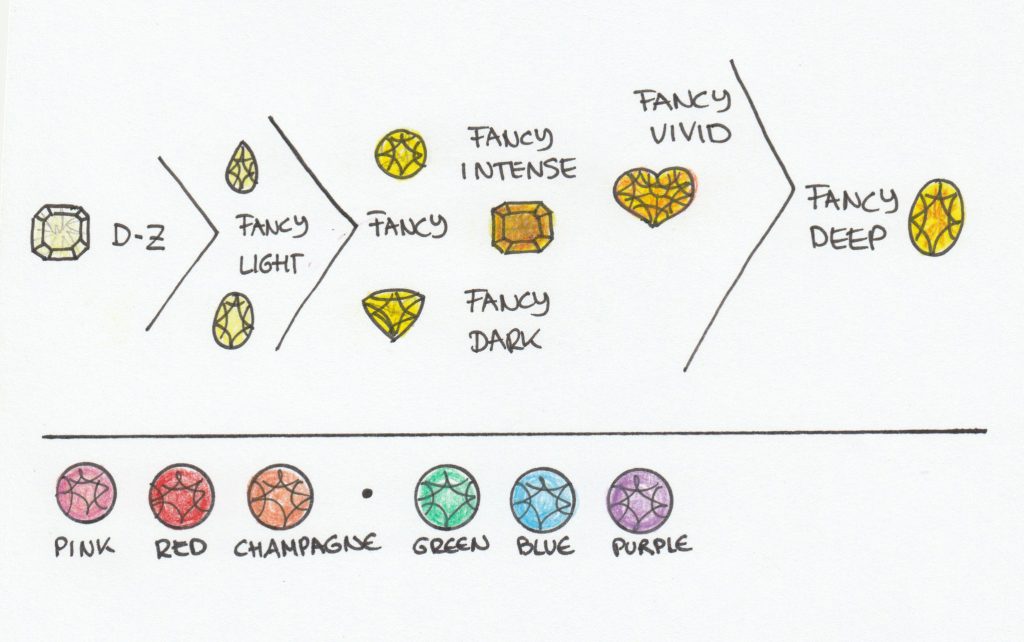
Coloured Diamonds are some of the rarest – It has been estimated that only one in every 10,000 natural diamonds is classed as a fancy colour diamond. Some colours and depths of shade are rarer than others but do remember to watch out for the last word in the laboratory’s colour description as it is actually the main colour.
So pinkish brown is a brown diamond with a hint of pink, but a brownish pink diamond is a pink diamond with a hint of brown.